

Well, how did I get here?
There’s a certain inevitability when working on a project — at some point things might just grind to a halt. This can be due to your own inaction, but it can also be out of your hands: sometimes clients or collaborators just don’t get back to you with something you need to keep the project moving.

Well, how did I get here?
Every product, printed word and image comes from somewhere, and perhaps more importantly, from someone (or many someones). There are myriad reasons why things are made, including necessity, profit-seeking and self-expression. Since an object’s history isn’t usually visible, it’s easy to take the things surrounding us at face value, without giving much thought to how and why they arrived in our orbit, or what will happen to them down the track. But sometimes we want to look a little bit more purposefully.
Last year, we developed a set of questions to help us think about the objects, words and images we interact with every day. We initially published these questions in the “object” part of our 2023 Print Object — a pocket-sized folded concertina of “How did this get here” questions. In this blog post, we’re sharing these questions because we think they’re a really useful tool.
To get started, find an object, an image or some writing you’re interested in thinking about. If it’s a tangible object (a ball, a phone, a length of wire), ask the questions in the “things” list below. If it’s a visual or written thing (the writing on a shampoo bottle, the ad text on a billboard, or an AI-generated image on your computer screen) use the “images/text” questions to guide your investigation. As for what to do with the answers to your questions – that’s up to you. Maybe you’ll be more appreciative of the object than you were previously. Maybe you’ll recoil in horror. Maybe you’ll have more questions…
Things
Who decided the thing should be made?
Who decided its form and appearance? Who gave input?
What materials were needed to make it? Where did they come from?
Who made it? Did they have help from machines? Where was it made?
Did the end product travel on a plane? In a truck? On a boat?
Where will the materials end up in 100 years time?
Words/images
Who decided this should be made?
Who came up with the concept?
What was it made for and what was it hoping to achieve?
Who made this? Did they get help? From who/what?
Who got paid for their work? (either for the end product or components)
What will happen to the piece in the long term?
—
Image note: the header image collage includes (L-R) a photo of Kelly’s temporary rubber band wallet, Anna’s “tomato” low-tech insulated cooker, a beer can from the film Repo Man, and a reusable shopping bag printed with an AI-generated image, spotted at Anna’s local supermarket. The background texture is from the 1981 music video for Talking Heads’ Once in a Lifetime.

What's the block?
There’s a certain inevitability when working on a project — at some point things might just grind to a halt. This can be due to your own inaction, but it can also be out of your hands: sometimes clients or collaborators just don’t get back to you with something you need to keep the project moving.

What’s the block?
There’s a certain inevitability when working on a project — at some point things might just grind to a halt. This can be due to your own inaction, but it can also be out of your hands: sometimes clients or collaborators just don’t get back to you with something you need to keep the project moving.
Recently, we’ve found ourselves being much more intentional about identifying when a delay becomes a block so we can address it. This seems obvious now that we write it down, but taking an intentional approach to blocks has changed our process around aspects of client (and internal) work for the better.
Our current unblocking approach started last year when we sent some draft content to a client for review and just… didn’t hear back. For ages. In these situations it’s easy to default to a) annoyance or b) just waiting… and waiting. However, a big part of our job is to help execute projects that people and organizations don’t have capacity to do themselves, so we realised we needed to take responsibility for the stall. Sending another “just following up!!!” email was obviously not the solution.
One day during our regular Antistatic catch up call, one of us asked: “what do you think [client]’s block is?”. As in: are they pressed for time? Or is a long document too daunting to review? Or do they prefer to give verbal feedback? We’re not psychologists, but we are here to make things easier for clients, and in this case reviewing and providing feedback obviously wasn’t feeling easy. So, we made our best guess about what might be blocking them from doing what we thought was an easy task, and adjusted our approach accordingly. And it worked a treat.
After this little client breakthrough, we started applying this approach to ourselves as well. If one of us just isn’t getting something done (responding to an email, writing a paragraph, reviewing a proposal) we try to pause and ask each other “what’s the block”. This can feel self-indulgent — what if the block is just procrastination? But even so, why is this the thing I’m procrastinating about? Perhaps I need more information, or I have a vague concern that our approach is wrong, or I’m nervous about the response to my unsent email. Once you’ve articulated the issue (and it’s almost never just I’m lazy) it’s much easier to work out what to do next.
That’s it: “What’s the block?”. It’s not rocket science, it’s just one little thing we do to be generous with each other and clients, and try to make sure everyone has what they need to do their best work.

Building the world for everyone
We want to live in a world that is built for everyone. From our cities, homes and infrastructures to our political systems, technologies and services, we want human-built environments and systems to be inclusive of everyone. We also want them to reflect our particular place in the world and allow for multiple worldviews and ways of thinking.

Image credit: Jamillah Knowles & Reset.Tech Australia / Better Images of AI / People with phones / CC-BY 4.0
Building the world for everyone
This essay was originally written as the introduction to More Zeros and Ones: Digital Technology, Maintenance and Ethics in Aotearoa New Zealand, an anthology of essays we edited that was published by Bridget Williams Books in September 2022. The version below has been edited to remove some content specific to the book’s other contents.
—
We want to live in a world that is built for everyone. From our cities, homes and infrastructures to our political systems, technologies and services, we want human-built environments and systems to be inclusive of everyone. We also want them to reflect our particular place in the world and allow for multiple worldviews and ways of thinking. Digital technologies and the services and tools that are built on top of them are woven throughout our lives. To build a world for everyone includes ensuring that digital systems are equitable, inclusive and empowering.
Industry commentators and the government alike want New Zealand to be an innovative, future-focused country that builds cutting-edge technology and thrives in a digitally connected global environment. Local companies like Rocket Lab and Xero are lauded for growing successful digital businesses with a strong international profile, and both public and private funders put considerable investment into growing New Zealand’s tech industry.
However, the future of New Zealand’s digital ecosystem can’t just be about rockets and exponential growth. To build a world that sustains both future generations and the land that nurtures us, we also have to care for the present. This means doing the tough and unglamorous work of identifying where existing systems aren’t working for – or are actively working against – the people they claim to serve, and then fixing these systems and changing the way things are built. This might not sound a lot like innovation (and, to be fair, it’s not as sexy or exciting as building rockets), but even the most spectacular of new inventions are built on the foundations of the past. Every time people make something ‘new’ they’re using existing tools and building off existing frameworks and technologies. If those tools and frameworks are biased, harmful, or designed to serve the needs of only a few, then the new things that get built will replicate the same old problems.
Historic inequities can be replicated during the design and development of digital technologies and services, which are often designed ‘for the 80 per cent’ – the centre of the bell curve that includes most but not all people. The people outside the 80 per cent will differ in different contexts, but might include blind or low vision people who use a screen reader to engage with digital content, Māori people for whom data is a taonga, or older people who did not grow up with digital technology. By consistently designing for the middle of the bell curve, the 20 percent of folks outside the middle have an uphill battle to get products and services that work for them, and decisions made for the majority often inadvertently reinforce systemic oppression.
We see examples of technology built using biased frameworks or designed for the 80 per cent – whether deliberately or inadvertently – all around us. For example, more and more businesses and organisations are providing vital services in a digital-first way, with in-person or other channels being secondary or an afterthought. This approach assumes a certain type of user with an up-to-date smartphone and relevant digital skills, and accepts the risk that a percentage of people will be excluded. Or take the example of cloud services, which is increasingly how data about us is being stored. As more and more data is handed off to international cloud storage giants, Māori have limited options to retain sovereignty over their information, which can become subject to international law and out of local control. Finally, the social platforms so many people rely on to connect with each other are designed in such a way that mis- and disinformation can spread at speed and scale, leading to real-world harm. We only have to look at the disinformation about Covid-19 vaccinations that has been spread widely over the course of the pandemic potential negative consequences for communities and whānau.
There are some really optimistic narratives circulating around the future of technology: that our problems can be innovated away with technical systems, and that increased decentralisation, transparency and automation can help us achieve prosperity and equity for all if we just deploy them for good. It’s easy to buy in to this version of a technological future – optimism is exciting, and these narratives make a fix look simple. If computer scientists can be aware of potential bias, maybe they can just code it away. If hiring managers acknowledge that certain demographics dominate the tech industry, they can encourage more women to apply for STEM jobs. If big platforms can just tweak a few content moderation settings, maybe they can do away with mis- and disinformation permanently.
However, surface-level adjustments won’t be enough on their own. There are some big underlying issues shaping the way digital technology is funded, designed and deployed that need to be addressed in order to see any real systemic change. Just like you can’t stop internal bleeding with a Band-Aid, you can’t make small adjustments to the products and services of a profit-focused company or institutionally racist organisation and expect them to suddenly centre the wellbeing of all users. When problems are deeply ingrained, our solutions also need to go deeper: starting with the way that digital systems and products are designed.
To begin to do things better, we argue that tech needs to be shifted away from the centre of the story. The optimistic narratives that promote technology as the solution for all problems often also treat digital technology as though it’s a force of nature – something to be harnessed, like wind, or the sun, or flowing water, in order to lead towards a certain kind of inevitable progress. But in reality, technology is made by people and is the product of human systems. No technology is an inevitability. It is only through the actions of many people over time that software, hardware and infrastructures are built.
The good news is that things can be different. If we acknowledge that no technological development is inevitable, it means we don’t just have to cross our fingers and hope that things will work out okay. Instead, we can work together to change the systems that are causing harm, and develop new practices. The bad news is that changing systems is hard work. Recentring people’s needs and aspirations over the demands of profit and convenience isn’t easy to do. It will require people with power to change their ways of doing things, make difficult decisions, and listen to others. And it will require courageous advocacy and action from everyday people. But if we want a more just and equitable future for everyone in this country, it’s essential that we get started.
Aotearoa New Zealand has a unique context and culture, and our digital systems need to reflect that. Fortunately, we already have many of the guides and levers we need to ensure our digital future upholds our specific values and uplifts our people and culture. Aotearoa’s digital ecosystems need to embed Te Tiriti o Waitangi – a founding constitutional document for Aotearoa. Our digital systems and policies also need to recognise human rights, for example by adhering to the Privacy Act 2020 and giving effect to the United Nations Declarations on the Rights of Indigenous Peoples and Persons with Disabilities.
Along with these existing commitments and guides, people in the tech industry, the government and communities will also need to develop a broad range of new ways of building, deploying and maintaining digital systems and infrastructure. Even within Aotearoa New Zealand, we know that one-size solutions don’t fit all, and that everyone experiences the internet and digital technology differently. Now it’s time to put this knowledge into practice.
Changing how we do things also means changing how we think about the future. Futurists are big business and their opinions are held in high esteem by many decision makers. For us, however, thinking about the future of the internet and digital technologies doesn’t mean looking for distant ‘signals’ about what the next big thing might be, so investors can accelerate growth and regulators can be ready to deal with any negative impacts that might come with it.
This approach centres exciting innovation and the emergence of new ideas, but it can also tend towards framing technology as something that just happens to society, where all any of us can do is be ready for what comes. This glosses over the agency and responsibility that people – including people here in Aotearoa New Zealand – have in building the world.
We propose an alternative approach to thinking about the future of technology. There are three questions we like to ask when thinking about what can be done now to shape the internet and the equitable digital world we want. It’s our way of thinking about the future, based on the reality of the present. We suggest that, when thinking about the possibilities of digital technologies and how they are embedded into our ways of doing things, you ask yourself:
What is working well now, and how do we maintain it to serve us in the future?
What is harming us now, and how do we dismantle or change it?
What is missing now, and what can we build to fill the gap?
The book from which this blog post was excerpted, More Zeros and Ones: Digital Technology, Maintenance and Ethics in Aotearoa New Zealand, is available from Bridget Williams Books, other booksellers, and maybe your local library. It contains chapters offering important contributions on issues from honouring Te Tiriti o Waitangi in tech and data projects to the right to repair. We highly recommend checking it out.

On feedback
A few months ago we came across a blog post that had been doing the rounds: “Stop serving the compliment sandwich,” by management psychology professor and self help author Adam Grant. Since we spend a lot of time thinking about giving and receiving feedback, this was the ultimate clickbait headline for us.
On feedback
A few months ago we came across a blog post that had been doing the rounds: “Stop serving the compliment sandwich,” by management psychology professor and self help author Adam Grant. Since we spend a lot of time thinking about giving and receiving feedback, this was the ultimate clickbait headline for us.
More popularly known as the shit sandwich, the compliment sandwich describes the process of couching critical feedback between two slices of complimentary bread. In his post, Grant describes how, as a 25 year old consultant, his attempts at delivering feedback via a shit sandwich didn’t go down well with the 50 year old CEO he was attempting to coach. Seems obvious to us, but hey, we don’t have the brain of a 25 year old management consultant.
To be honest, we were ready to rebel before even reading the post. For better or worse, we’ve always considered ourselves as appreciators of the shit sandwich — just give us a little treat before getting to the hard stuff! Our job involves getting a lot of feedback, constant feedback. We write things or come up with ideas, and clients tell us what they think of them and what we need to change. Writing for a client is an iterative process, and getting clear direction and feedback helps make the end project as good as possible. For whatever reason, though, diving directly into “‘what needs to change” can be hard.
Grant’s first main point — that the shit sandwich is often received as two obligatory complements surrounding a chunk of life-ruining criticism — is obviously true. Getting a compliment from a boss or colleague shouldn’t have you cringing and waiting for the bad news to drop. Grant’s suggestion for a shit sandwich alternative, though, struck us as equally objectionable. His advice includes taking yourself off a pedestal by saying something like “I’ve been studying great managers, and I’ve noticed that they spend a lot of time giving feedback. I’m working on doing more of that.” This would go down like a lead balloon around here. As we said, it’s our job to receive feedback. We don’t need an explanation of why we’re receiving feedback.
In thinking about what we do want from feedback, we realized we’re not actually after a shit sandwich. We’re after something like a feedback funnel. Here’s what we mean by that.
The Feedback Funnel
As consultants, we’re not usually around long enough to receive a whole lot of coaching or professional development from our clients. The classic shit sandwich comes from a superior whose job it is to tell you how to do your job better.
In our case, we’re usually receiving constructive feedback about a project and a specific deliverable, rather than personal critique of our interaction style or work habits. So, it stands that the process of giving feedback would be different from a standard workplace professional development session.

The top layer: context and compliments
The feedback funnel, like the classic inverted triangle of news journalism, goes from a high level at the top down to more detailed info at the bottom. Specifically, the feedback funnel goes from broad contextual information at the top (the beginning of the conversation), down to narrow nitty-gritty at the bottom (at the end).
First up, we like to hear how clients are feeling about the project broadly speaking, and whether they think the document draft, let’s say, is heading in the right direction. Does the structure work for you overall? Did we get the tone right? Or is it sitting weirdly for some reason, or not aligned with what you were imagining? This lets us start with a high level view, taking a look at the work overall and assessing whether we’re on track. At this point, feel free to throw in a complement. Did you love the intro? Do you think we nailed the tone? This isn’t just to make us feel good — it lets us know what you liked and what we should do more of, even if you hated everything else.
The middle layer: details
This is the shit in the classic shit sandwich. In our case, though, it isn’t shit — it’s just details. This is where you tell us the specifics of what you’d like us to change, what we need to add, what details need finessing, or what you want more of. We don’t consider this as criticism at all, or at least not in the bad ego-damaging way. It’s critical information that lets us do the job you hired us for.
It took us a while to get to this relatively zen place around feedback. Mostly, we had to learn to disconnect our ego from the thing we made. It’s just a draft! It’s a thing that exists in the world, and we’re putting it on the table so everyone can look at it and talk about how to make it better. It’s not a reflection of us as people. Oh, final thing — if you can help it, don’t dive into line edits at this point. If it’s a semi-final draft, send us an email with your markups. If it’s an early draft, everything is subject to change and typos will likely come out in the wash, so give us structure notes and style notes but don’t waste your time with word-level edits.
The bottom layer: needs and next steps
The pointy end of the funnel, and also the last bit of the conversation (or email) is where we get down to brass tacks. At this point, we discuss the specifics of what’s next and what’s needed. What are the next steps? Does anyone else need to give feedback or can we get to work making changes to the draft? Do we need to get more information from you in order to move forward, or is there a background document you’ll send us to help fill some gaps? Then, there’s maybe time for a bit of chit chat (does your cat need to be fed? Are you excited for lunch?). And then, at last, we take our marching orders and all go on our way.
There you have it. Move over shit sandwich, there’s a new tortured metaphor in town!
Want to give us feedback? You can send us an email with your thoughts, or hire us to work on your next project. We’re open for new collaborations from mid-May 2024 onward.

A look under the hood at how Antistatic operates
It’s been almost 8 years since we came up with the name Antistatic and slowly started to piece together the processes, clients and projects that make our business what it is today. Antistatic is completely normal in some ways and completely unusual in other ways — not everyone starts a business with their sibling, and not everyone trusts their coworker with their life — but mostly we’re just a small consultancy with our own quirks and priorities.

A look under the hood at how Antistatic operates
It’s been almost 8 years since we came up with the name Antistatic and slowly started to piece together the processes, clients and projects that make our business what it is today. Antistatic is completely normal in some ways and completely unusual in other ways — not everyone starts a business with their sibling, and not everyone trusts their coworker with their life — but mostly we’re just a small consultancy with our own quirks and priorities. We love to read about how other people run their projects and businesses, and thought we’d reciprocate with a bit of a look behind the curtain at how Antistatic operates.
We split all income down the middle: When it comes to paid work, we split the income 50/50, regardless of how many hours we each work on a project. We both work concertedly on Antistatic, whether that’s client work, our own projects or business development. To us it makes sense that we are compensated equally, regardless of who is doing what. We made this decision really early on at a time when we were still doing quite a few separate contracts. It was a mental adjustment at first, but it’s one of the best business decisions we made. There have been a couple of specific exceptions and adjustments for exchange rates and whatnot, but the essence of this principle has stayed the same.
We are small on purpose: When you start a business, people often assume your eventual goal is to expand, bring on extra staff and maybe one day sell for a profit. We love to collaborate with others and bring on specific expertise for projects as needed, but we don’t intend to bring on employees or expand beyond the two of us. This has two main benefits. One, we don’t have to be managers. We got into business together because we like doing the work, and are fairly certain that managerial life is not for us. Two, it’s more flexible and less stressful. Contract work naturally has ebbs and flows, and bringing on other employees would increase our expenses and make the quiet times more stressful. The approach has implications for the sale-ability of Antistatic in the future, but we think of the business as the two of us. It’s likely that if and when we decide to stop our work, Antistatic will also cease to be.
We pursue our interests and are guided by values: When we started, we got good advice to lean into a niche in our work. Despite this, it was tempting to just say yes to any work we were offered. We were always certain about our values and avoiding work that was morally compromising, but sometimes the gigs weren’t ideal — Anna even had a couple of roles embedded in teams doing business-as-usual work in the early days. Over time, we became more confident about the types of client work we wanted to take on and what subjects we were keen to explore. We also built the track record and reputation necessary to get the kinds of jobs we wanted. These days, we have a matrix we run through when deciding whether to pursue a project, and if the criteria isn’t met it will be a polite no from us. This was hard at first — especially when we don’t have other paid work in the pipeline — but has opened up space for the work we do want, and has always felt like the right decision.
We spend a lot of time talking and typing to each other: We’re in different timezones, but for the four days a week we’re online at the same time we are usually on the phone for hours with each other or with clients, complemented by a lot of Skype chat (yes we still use Skype… our tech stack could be a whole other blog post!). We do a check in every day, and often have things to work through together: fleshing out ideas, discussing timelines for client projects, or chatting as we collaboratively edit a Google doc. Our calls can also be… varied. Being siblings as well as business partners, there are other points of business like remembering our nieces and nephews’ birthdays, or what to get mum and dad for Christmas. We also have a standing topic called “cultural corner” where we talk about the movies we’re seeing or gigs we’re attending.
We let the weird and conventional sit together under the same banner: Antistatic is a bit of a weird creature: our day to day client work is often writing pretty conventional reports for government departments or NGOs, or developing narrative strategy for new initiatives. Then there’s everything else we choose to do because it’s interesting to us: making ugly slide decks, editing a book, sending out an annual zine or organising a Wikipedia edit-a-thon. Depending on how you stumbled upon Antistatic, one of these aspects might be way less visible to you. But we’re proud to do a combination of paid work and idiosyncratic self-led projects, and have become comfortable with letting these sit under the same name and banner.
If you’d like occasional updates from us, we send a quarterly newsletter that you can sign up for here.
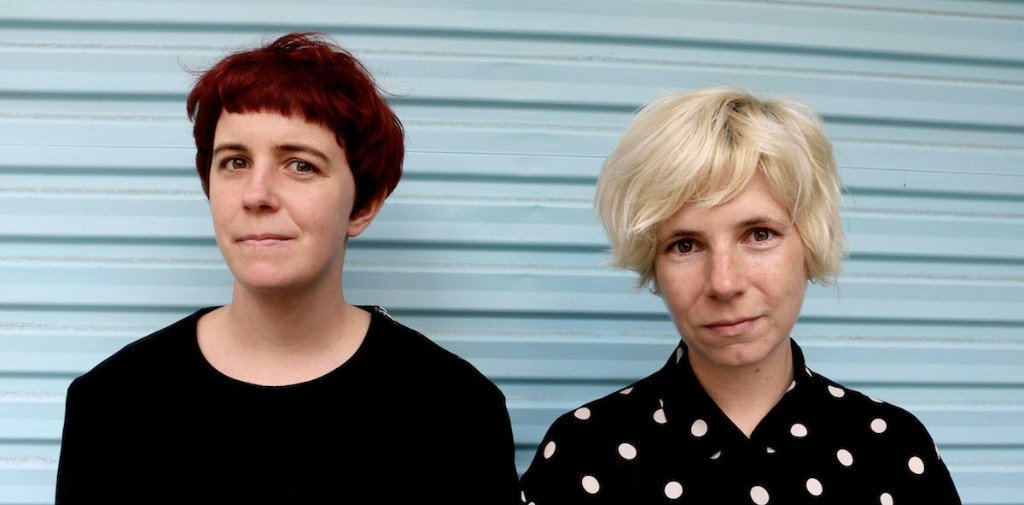
Blast from the past: one of our first team portraits from 2018. Photo Credit: Brian Schumacher