
Group Meeting
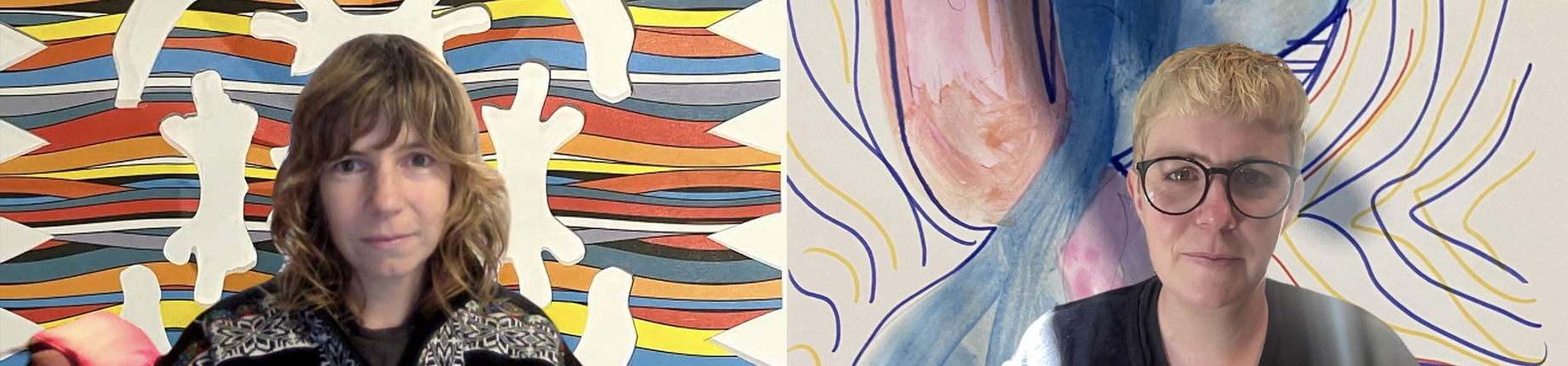
One of our self-driven projects of 2025 was Antistatic Meeting Room, a non-negotiable time we set aside each week to talk – to each other, with others – about things other than admin and client work. The aim was to carve out space to generate ideas, and spend time talking with the folks in our network; this kind of connection-building is the first thing that drops off the radar if we get busy with deadlines.
A highlight of Antistatic Meeting Room was our monthly group meeting (creatively named “Group Meeting”), where we met with folks in our network – from former Twitter mutuals to past collaborators and IRL friends – to connect and talk broadly around a certain theme for an hour. Group Meeting came from a desire to strengthen our connections with people we’d met in various places (Twitter/Bluesky, our mailing list, through various projects, in person) but not quite feeling like there are the mechanisms to do this at the moment.
While we won’t be continuing our meetings practice in the same format in 2026, there’s lots we have learned from it and will incorporate into our day-to-day work. For anyone considering something similar, here are some aspects of Group Meeting that have worked well for us:
Setting aside a few minutes to make art grounds the space and gets people into the zone. At the start of each call we all spend 5 minutes to make a bespoke background for the Zoom — the resulting digital space is always a joy to see. Just remember to revert your background afterwards!
We try to be as inclusive as possible of different time zones (especially the US and New Zealand, where we live), but know that getting the perfect time for everyone is impossible.
We find that between 5 and 8 people (including hosts) seems about right for numbers – one or two people often can’t make it, so we let the guest list be a little longer when doing sign-ups.
A high-level theme can help to ground the conversations, and people can riff on it and expand in whatever direction they like.
Taking notes (even rough ones) and circulating them to attendees means everyone can remember who was in the meeting and what was discussed if they want to build on ideas in the future, plus it’s a fun way to play on the idea of meeting minutes.
Meeting themes
Here are the topics we explored in Group Meeting 2025. They were intended to be broad and somewhat poetic, to allow for a range of conversational directions.
Touching grass. The proposed antithesis to internet brainrot is “touching grass”; we’re interested in talking about what that means. What grass touching activities are we all engaging with at the moment / what feels urgent and important / what might help.
Context. We’re interested in talking about what it means to experience things in context, and what happens when things are divorced from that context. See ourAntistatic slide show for the week of 6 January for some of Kelly’s initial thoughts.
Slow ideas. Your problematic faves of yesteryear had to disseminate their theories via letter and conduct debate through the mail or in print. We, on the other hand, can post instantly. Do we need a Slow Food movement for ideas?
Doing time. Why are we so bad at long-term thinking? Or: is long term thinking even possible? Some long-termers focus exclusively on a 10,000 year timeline, while others see no future at all and say “screw it, time to take up smoking/burn some more fuel/spend down my retirement account”. How do we live in time, now?
Other networks. Not everything is on the internet.Other networks are available, and maybe we should spend more time exploring them.
About the dark times. How are we interpreting Brecht'sfamous motto these days? An invitation to sing (despite the dark times)? A call to act (so that others might sing about us)? An acknowledgement that human experience contains multitudes? In other words: what is the role of art in these times?
Finding aids. Robin Sloan has written that "where the internet is concerned, we are in a crisis of discovery". In a partly de-physicalized cultural landscape (where even the architecture of the web doesn’t feel much like an architecture any more) are there still ways to follow your nose, or happen across something excellent? How are we finding books, ideas, objects these days?
Emergency archives: how do we save and steward materials and data on the fly in a time of instability and rapidly evolving threat (climate, governmental, financial)? What are we saving — and for whom? More broadly: archives about emergency, archives during emergency, archives as emergency. (No archival experience necessary, of course!)