
At home she feels like a tourist
One of our self-driven projects of 2025 was Antistatic Meeting Room, a non-negotiable time we set aside each week to talk – to each other, with others – about things other than admin and client work. The aim was to carve out space to generate ideas, and spend time talking with the folks in our network; this kind of connection-building is the first thing that drops off the radar if we get busy with deadlines.
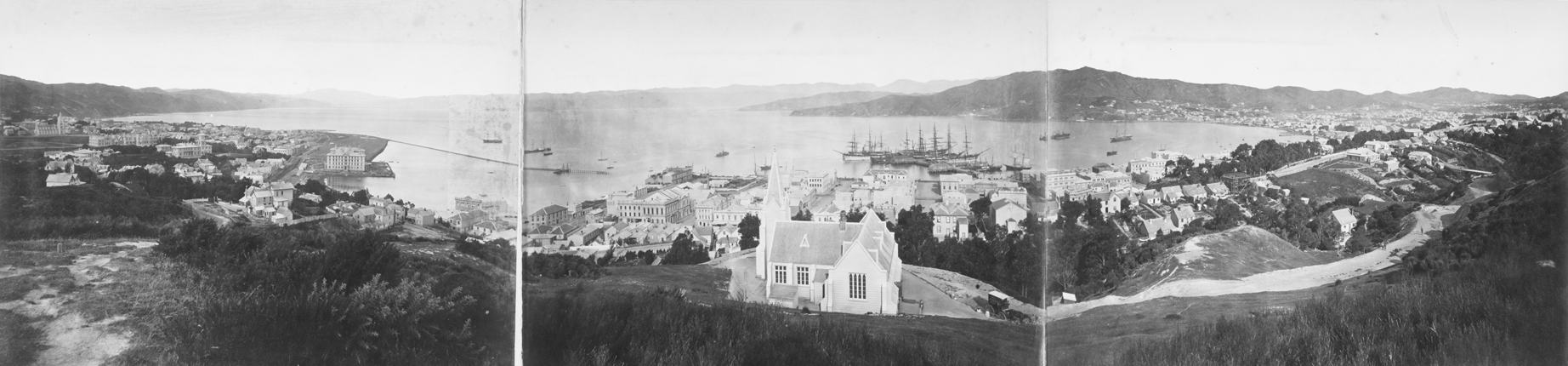
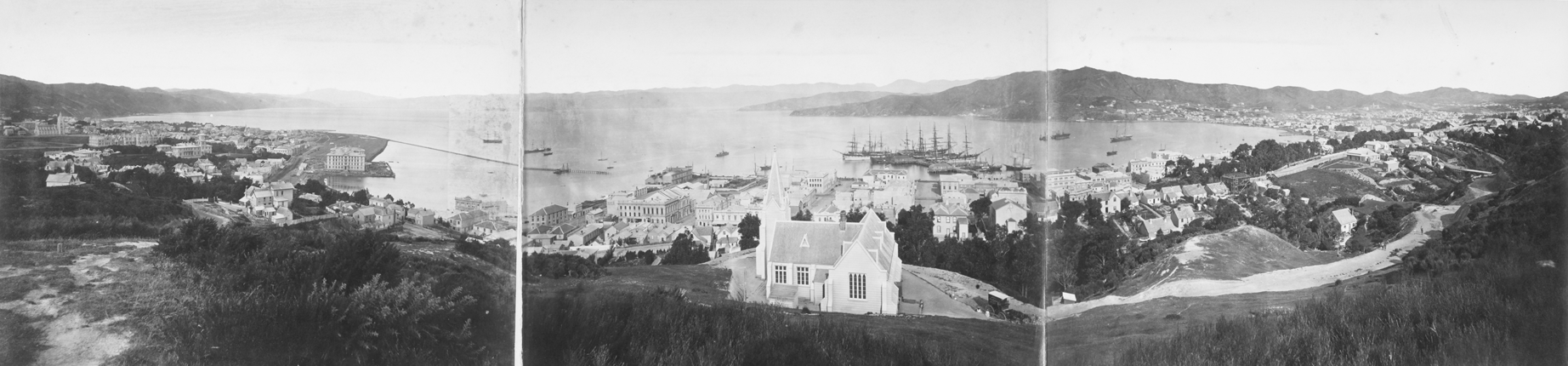
City of Wellington, From the album New Zealand scenery: Wellington to the Wairarapa., mid 1870s, Wellington, by James Bragge. Te Papa (O.032418)
At home she feels like a tourist
In October 2026, here at Antistatic we started Field Trip Friday, an experiment that leans into the fact that Friday afternoons can easily be whiled away staring at a monitor not getting much done. Instead, we started logging off at lunch time on a Friday to go on an adventure in or around our respective cities. The theory was that these hours weren’t being used very well anyway, so any inspiration and fun we encountered was only going to be good for us (and the business). Field Trip Friday has two rules: “no errands” and “do something arts or culture related”. Beyond that, it’s been up to each of us what we do and how ambitious each week’s trip is.
Here’s five things we’ve learned from this new(ish) ritual:
The more you look, the more the city opens up to you. When you’ve lived somewhere for years, the places you go often solidify into a routine, even if there’s some variability in the day-to-day. On Field Trip Friday we’ve both gone to places that have been on our to-do lists and sought out places and experiences we didn’t know existed. We’ve done self-led architecture tours, wandered through publicly accessible buildings and hard-to-find shopping arcades and bookbinding museums. Each new wall text we read or tour we take deepens our understanding of the places we live. It’s a reminder that there is so much waiting to be discovered, even in the seemingly mundane.
Our productivity and ability to meet deadlines hasn’t decreased. Our client workload generally ebbs and flows during the year, but even during busy periods we’ve managed to structure our time to keep Field Trip Friday going. We’ve made occasional exceptions for important meetings, but do our best to protect this time in our calendars.
The curiosity bleeds into the rest of your life. Some of our favourite exploring over the past 6 months didn’t actually happen on a Friday, but the vibe of FTF is contagious and can spill into the rest of your week. Since we started, Anna has been on guided tours of the art of Government House, the Durie Hill Elevator in Whanganui and Peter Jackson’s WWI plane collection in Wairarapa. Kelly’s birthday celebration this year rallied a group of friends to trek across San Francisco on the Crosstown Trail. We’ll stop and read the signs that are peppered around the city with historical information that we’ve often passed by. It’s been a reminder to be curious in our day-to-day.
Field Trip Friday takes effort. Following the rules of Field Trip Friday is easier said than done. In practice, you have to try quite hard not to sneak in errands when you’re out and about if there’s a haircut or vaccination on your list of to-dos. It’s also surprisingly hard, in Wellington at least, to find a new place to go each week when it seems like you’ve explored every museum in a 100 mile radius. One thing that has helped is remembering that Field Trip Friday is part of our work, not just a long weekend. It’s also good to chat about our outings each week as a form of accountability. It’s also been great to get recommendations from friends about places to check out.
Experiments don’t have to last forever. Over the past month or so, we’ve both been getting worse at doing Field Trip Friday. We’ve been loosey goosey about what counts as arts and culture (and not necessarily in a good way) and Anna has been sneaking in physio appointments between gallery visits. Since we check in regularly about what we did on Field Trip Friday, we’ve had the chance to discuss whether it’s time to get re-dedicated to the ritual, or if it’s served its purpose for now in this format. We’re still not sure, but we do know that we’ll be exploring the places we live in a new light from now on.

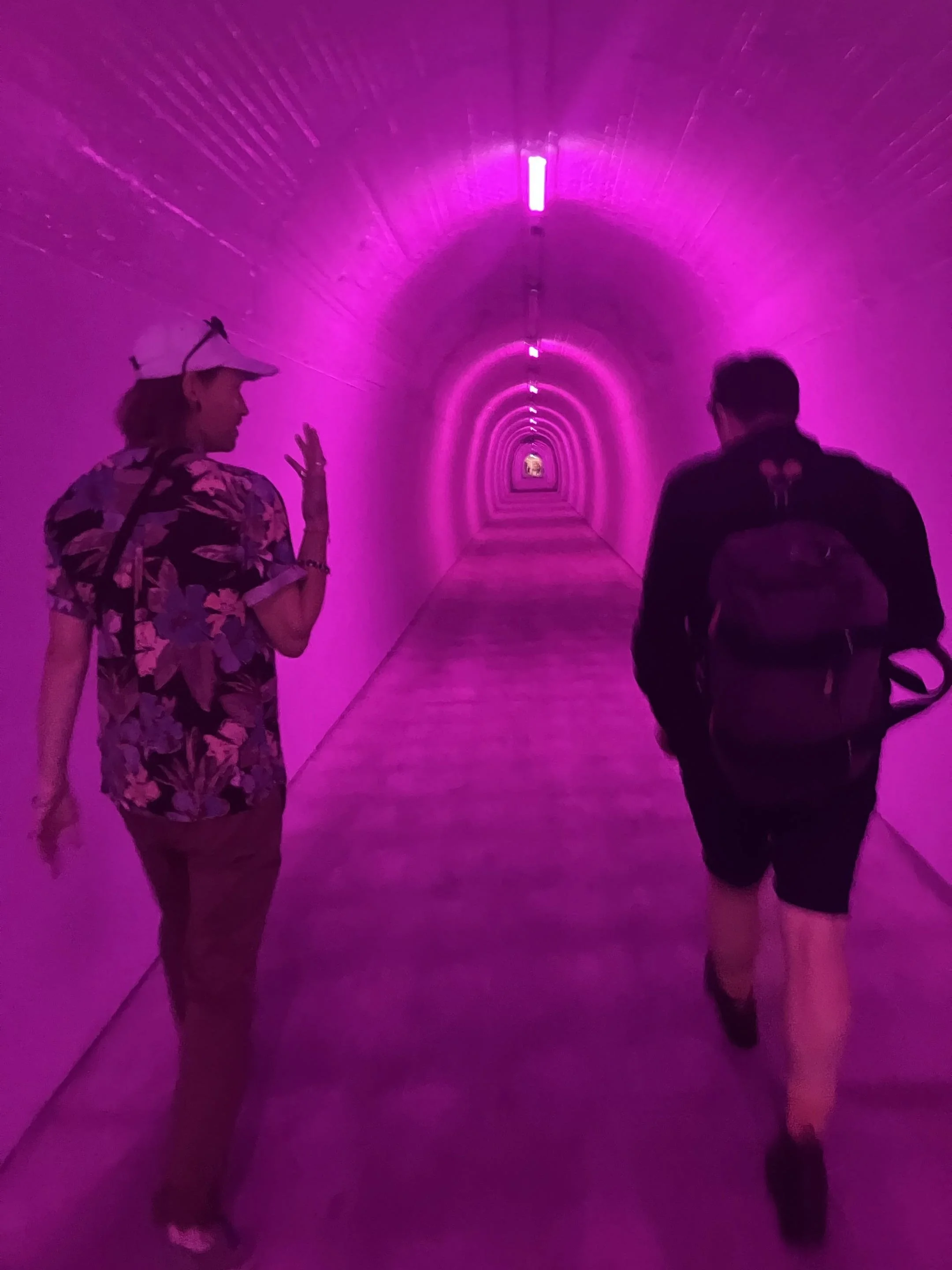
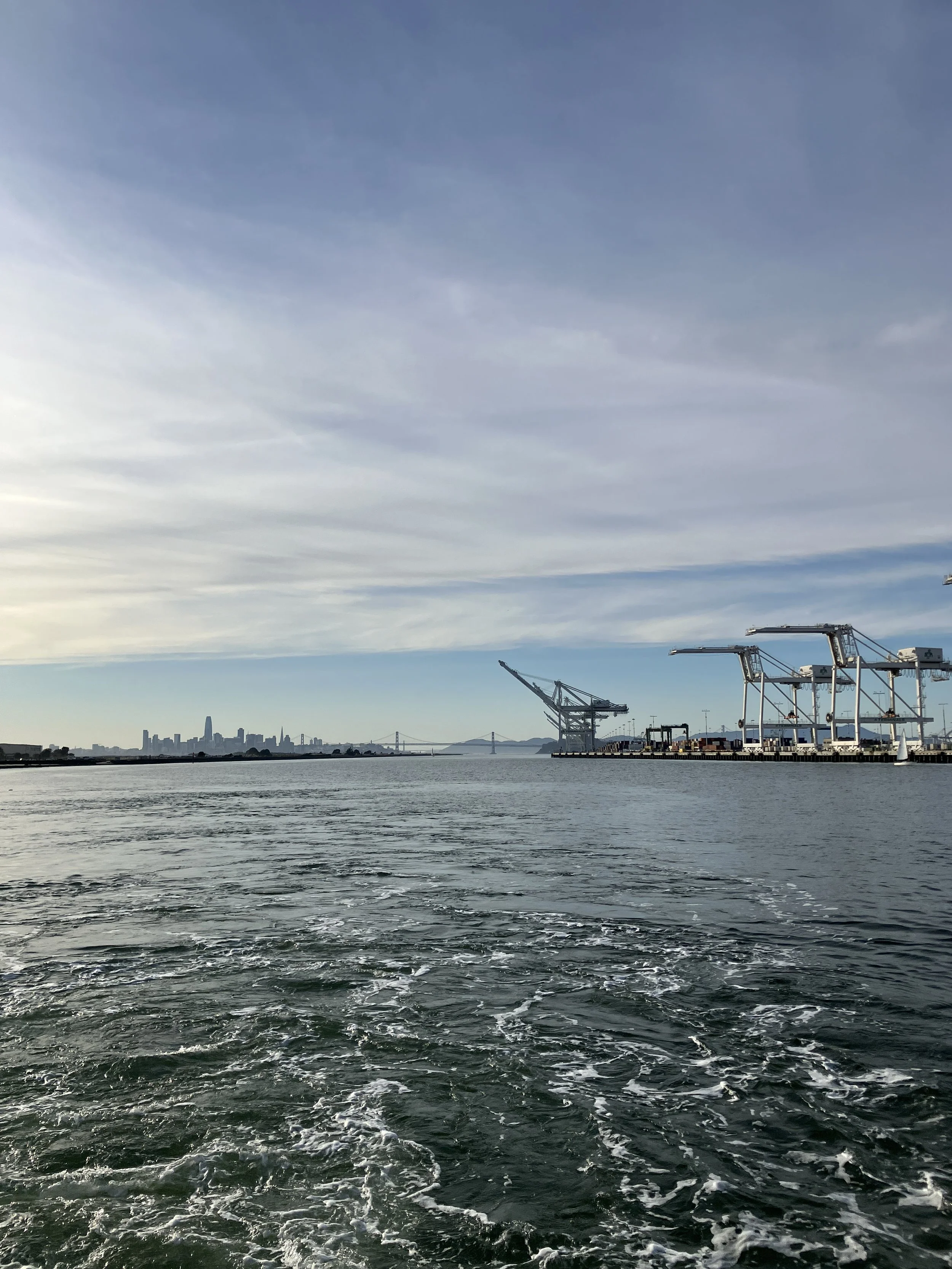
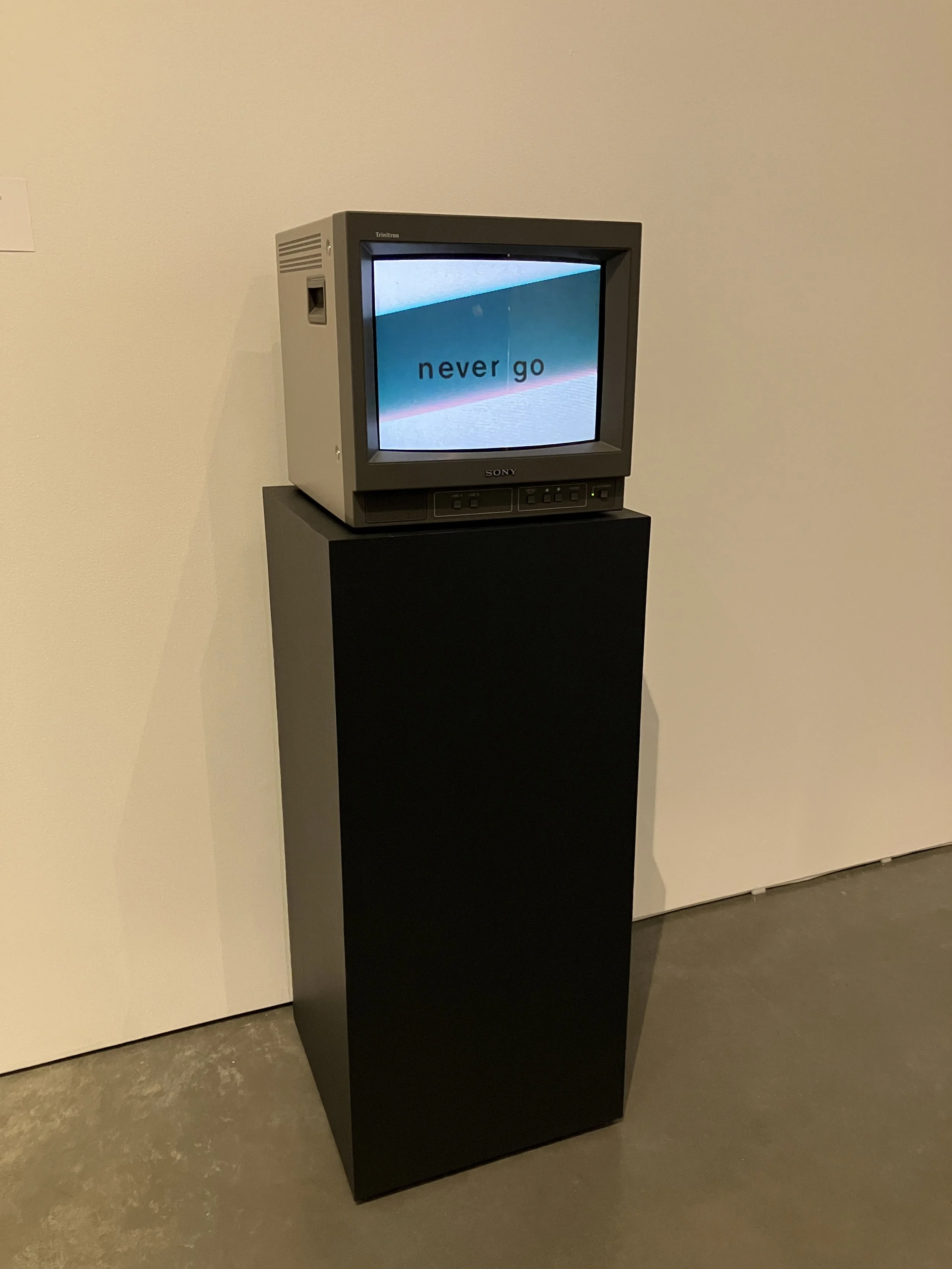
L-R: biplane in the 1914-18 Aviation Trust collection at the Hood Aerodrome in Wairarapa; in the tunnel leading to Whanganui’s Durie Hill Elevator; view from the Oakland-San Francisco ferry en route to a museum; video installation at Theresa Hak Kyung Cha: Multiple Offerings at BAMPFA.
Group Meeting
One of our self-driven projects of 2025 was Antistatic Meeting Room, a non-negotiable time we set aside each week to talk – to each other, with others – about things other than admin and client work. The aim was to carve out space to generate ideas, and spend time talking with the folks in our network; this kind of connection-building is the first thing that drops off the radar if we get busy with deadlines.
Group Meeting
One of our self-driven projects of 2025 was Antistatic Meeting Room, a non-negotiable time we set aside each week to talk – to each other, with others – about things other than admin and client work. The aim was to carve out space to generate ideas, and spend time talking with the folks in our network; this kind of connection-building is the first thing that drops off the radar if we get busy with deadlines.
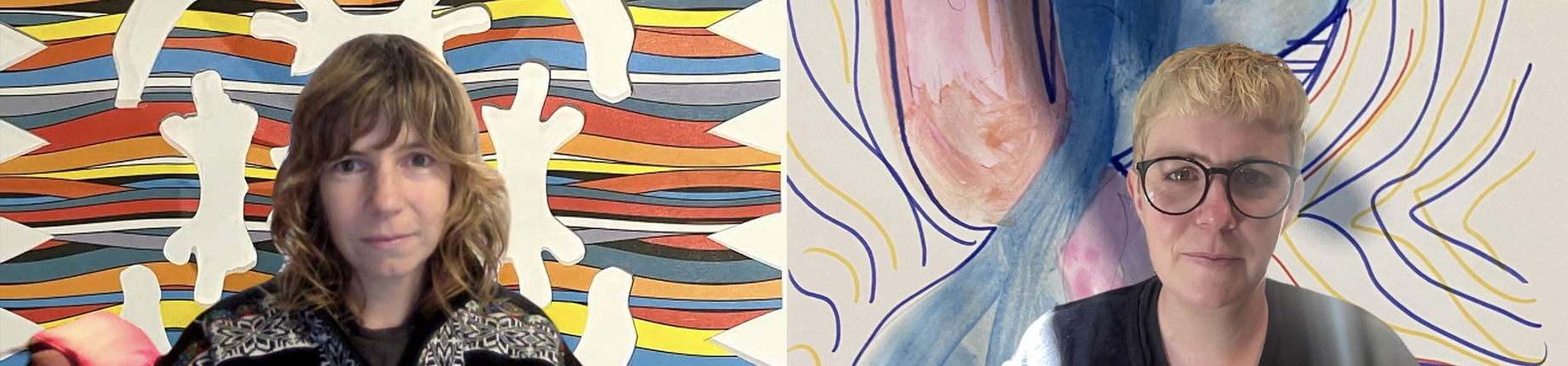
A highlight of Antistatic Meeting Room was our monthly group meeting (creatively named “Group Meeting”), where we met with folks in our network – from former Twitter mutuals to past collaborators and IRL friends – to connect and talk broadly around a certain theme for an hour. Group Meeting came from a desire to strengthen our connections with people we’d met in various places (Twitter/Bluesky, our mailing list, through various projects, in person) but not quite feeling like there are the mechanisms to do this at the moment.
While we won’t be continuing our meetings practice in the same format in 2026, there’s lots we have learned from it and will incorporate into our day-to-day work. For anyone considering something similar, here are some aspects of Group Meeting that have worked well for us:
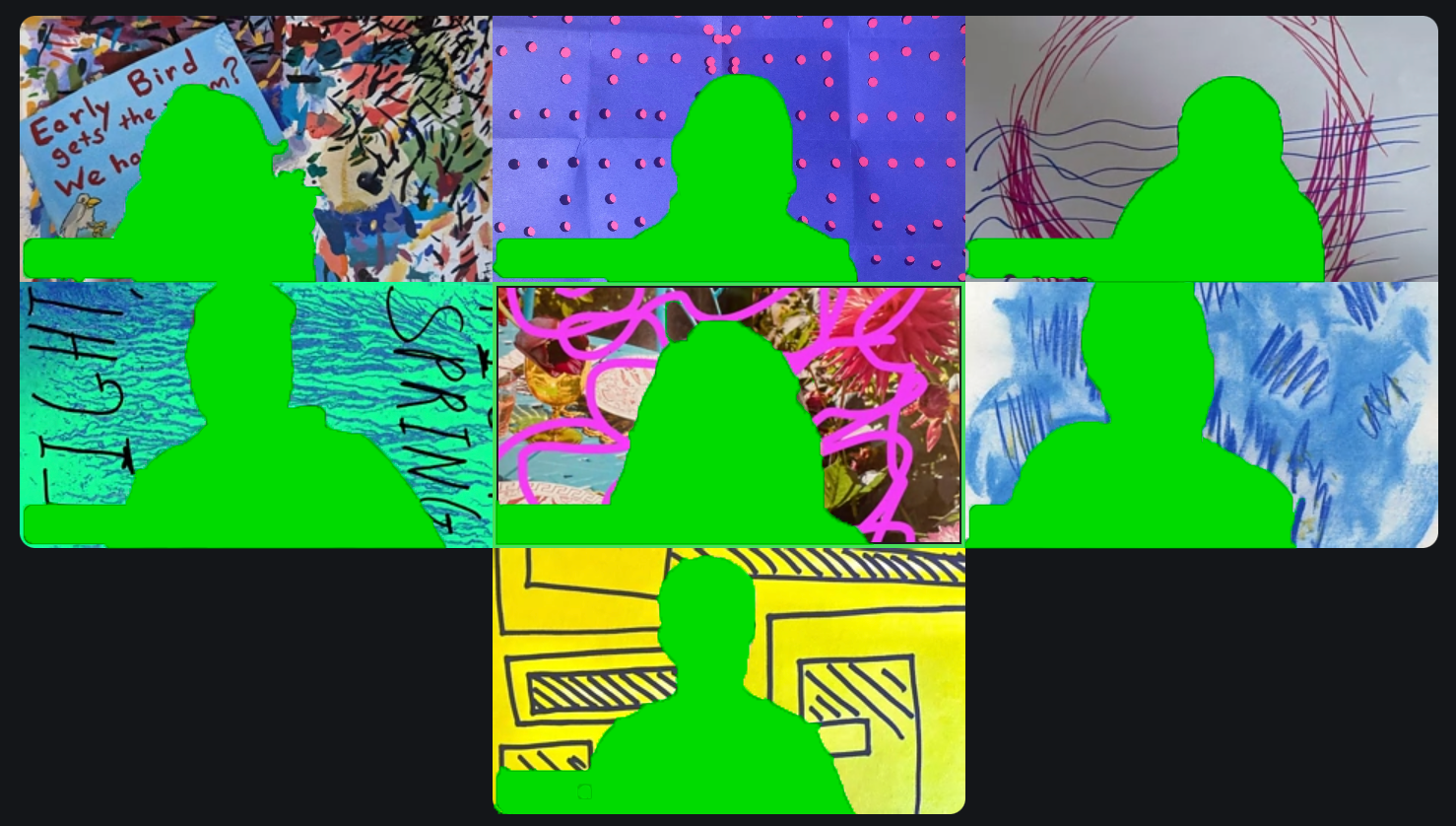
Setting aside a few minutes to make art grounds the space and gets people into the zone. At the start of each call we all spend 5 minutes to make a bespoke background for the Zoom — the resulting digital space is always a joy to see. Just remember to revert your background afterwards!
We try to be as inclusive as possible of different time zones (especially the US and New Zealand, where we live), but know that getting the perfect time for everyone is impossible.
We find that between 5 and 8 people (including hosts) seems about right for numbers – one or two people often can’t make it, so we let the guest list be a little longer when doing sign-ups.
A high-level theme can help to ground the conversations, and people can riff on it and expand in whatever direction they like.
Taking notes (even rough ones) and circulating them to attendees means everyone can remember who was in the meeting and what was discussed if they want to build on ideas in the future, plus it’s a fun way to play on the idea of meeting minutes.
Meeting themes
Here are the topics we explored in Group Meeting 2025. They were intended to be broad and somewhat poetic, to allow for a range of conversational directions.
Touching grass. The proposed antithesis to internet brainrot is “touching grass”; we’re interested in talking about what that means. What grass touching activities are we all engaging with at the moment / what feels urgent and important / what might help.
Context. We’re interested in talking about what it means to experience things in context, and what happens when things are divorced from that context. See our Antistatic slide show for the week of 6 January for some of Kelly’s initial thoughts.
Slow ideas. Your problematic faves of yesteryear had to disseminate their theories via letter and conduct debate through the mail or in print. We, on the other hand, can post instantly. Do we need a Slow Food movement for ideas?
Doing time. Why are we so bad at long-term thinking? Or: is long term thinking even possible? Some long-termers focus exclusively on a 10,000 year timeline, while others see no future at all and say “screw it, time to take up smoking/burn some more fuel/spend down my retirement account”. How do we live in time, now?
Other networks. Not everything is on the internet. Other networks are available, and maybe we should spend more time exploring them.
About the dark times. How are we interpreting Brecht's famous motto these days? An invitation to sing (despite the dark times)? A call to act (so that others might sing about us)? An acknowledgement that human experience contains multitudes? In other words: what is the role of art in these times?
Finding aids. Robin Sloan has written that "where the internet is concerned, we are in a crisis of discovery". In a partly de-physicalized cultural landscape (where even the architecture of the web doesn’t feel much like an architecture any more) are there still ways to follow your nose, or happen across something excellent? How are we finding books, ideas, objects these days?
Emergency archives: how do we save and steward materials and data on the fly in a time of instability and rapidly evolving threat (climate, governmental, financial)? What are we saving — and for whom? More broadly: archives about emergency, archives during emergency, archives as emergency. (No archival experience necessary, of course!)

Every Object an Archive
Late last year, we quietly launched a new Antistatic project we’ll be working on in 2026: Every Object an Archive. One object at a time, we will be conducting interviews with people about their experiences using once-ubiquitous technologies. These will take the form of ‘exit interviews’ for technologies (with users as a proxy for the objects themselves). First up, in early 2026, we will be exploring the landline telephone.

Antistatic presents: Every Object an Archive
Late last year, we quietly launched a new Antistatic project we’ll be working on in 2026: Every Object an Archive. One object at a time, we will be conducting interviews with people about their experiences using once-ubiquitous technologies. These will take the form of ‘exit interviews’ for technologies (with users as a proxy for the objects themselves). First up, in early 2026, we will be exploring the landline telephone.
Every Object an Archive was inspired by the obvious-but-cosmic idea that all the physical and technological objects populating our homes, workplaces and cities — from ballpoint pens to the latest smartphone — can be a history lesson, an archive, or a lens. They are material, but they are also emblematic of a set of social and technological conditions, and their use gives rise to specific kinds of behavior and cultural practice.
Many of our friends and influences in the worlds of history, science and technology studies, and anthropology have been exploring the influence of tools and technologies on society for decades. As material culture nerds and tech-adjacent writers, we’re especially interested in thinking about what we gain and what we lose in technological transitions — and how people feel about it. When technology evolves and an older tool falls out of popular use, the cultural practices that evolved around, say, the landline or the horse and buggy, often fall out of use too.
The Every Object an Archive interviews will be an opportunity for people to reflect on how technologies impacted their lives and consider (in the mode of a classic exit interview) what should be improved, changed, or remain intact as new objects and processes take their place. It will also be an opportunity for us to think about potential interventions in the current and emerging technological and social landscape.
We’re starting this project under our own steam, because we have time and we’re keen to get started on Issue 1: Landline as a proof of concept. If you have ideas for funding avenues or potential sponsors for a future issue we’d love to hear from you.

Submission: Moving towards a financially sustainable mail service
This week, Anna made a submission on proposed changes to New Zealand Post’s minimum service obligations, which are set out in the Postal Deed of Understanding. Proposed changes include reducing the number of mail delivery days from 3 to 2 in urban areas and from 5 to 3 in rural areas. The content of Anna’s submission, which reflects the views of Antistatic more generally, is re-posted below.
Submission: Moving towards a financially sustainable mail service
This week, Anna made a submission on proposed changes to New Zealand Post’s minimum service obligations, which are set out in the Postal Deed of Understanding. Proposed changes include reducing the number of mail delivery days from 3 to 2 in urban areas and from 5 to 3 in rural areas. The content of Anna’s submission, which reflects the views of Antistatic more generally, is re-posted below.
You can read the discussion document, Moving towards a financially sustainable mail service, and further information about the consultation on the Ministry of Business, Innovation and Employment's (MBIE) website.
The submission below has been reformatted for publishing online, and we have removed the questions Anna did not provide answers for. The submission was lodged as a Word document using the template provided.
Name: Anna Pendergrast
Organisation: Antistatic New Zealand Limited
I am writing this submission from three perspectives: as an individual who uses the mail service, a small business owner, and a writer and strategist who has a specific focus on digital technology and infrastructure systems and their impacts on people.
Introduction
The postal service in Aotearoa New Zealand is an important infrastructure that supports community connections, businesses and democracy. I consider the approach proposed in the discussion document — including reducing the number of delivery days and postal outlets – makes sense within the State Owned Enterprise model and in the context of dwindling mail volumes. However, I am concerned that this approach, and particularly the reduction of delivery days, is a concrete step towards dismantling the infrastructures that support regular, reliable mail delivery.
One of the concerns expressed both in the discussion document and in media commentary on the subject is that people who are not digitally included may be disproportionately impacted by the reduction in mail delivery days and post office service centres. While I agree with this concern, I also think there is also a wider issue to consider – that a regular, reliable mail system allows for a fundamentally different type of connection and communication than email and other internet-enabled communication.
Beyond the goal of ensuring NZ Post can be financially sustainable, we should be asking: what will be lost if the underlying infrastructures are further dismantled? The ability to send and receive a written card or letter – even if it’s very occasionally – is powerful. The internet as a “place” to congregate is in flux, and shouldn’t be seen as the inevitable replacement for as much physical mail as possible.
To this end, I recommend that the next review of the Deed of Understanding includes a broader consultation to understand what people in Aotearoa need and want from a postal system (including NZ Post parcel and courier products). Focusing on the outcome of NZ Post needing to operate profitably is too narrow and does not allow for community and business aspirations to be shared and a clear strategy to be made to get there.
General questions for organisations and businesses
What sector of the economy does your business or organisation operate in?
Antistatic is a communications and research consultancy.
Roughly how many letters does your business or organisation send in a month? And how many do you receive?
On a day-to-day basis, we operate primarily digitally and do not send much mail.
However, at the end of each year, we send out a physical Antistatic Print Object as a gift to colleagues and friends. We use the mail service to do this and I typically send about 60 A5 envelopes around Aotearoa and Australia (my colleague who is US-based sends about 80 pieces of mail using the USPS).
This project is a purposefully offline exploration of alternative methods of distribution, and reflects that there is inherently a different feeling from receiving a physical object you can hold and share than an email that arrives in an already crowded inbox.
Are you planning to undertake any programmes to reduce your business’ or organisation’s reliance on mail e.g. transitioning towards digital alternatives. Why/Why not?
We will continue to send people a physical Print Object annually and will likely add an e-commerce mail-based offering in 2025.
Is there some amount of mail you still need or expect to send even if your business uses alternative communication channels?
As above, once a year we will send about 60 A5 envelopes within Aotearoa and Australia. This may increase in future years as we plan to have an option that allows us to cover costs which will increase the number we can send.
General questions for individuals
Roughly how many letters do you send in a week?
In a personal capacity I send about 2 letters or postcards a month, with more over the Christmas period.
What is your main reason for using the mail service, versus other means of communication e.g. face-to-face, email, online etc.?
As noted above, there is a real joy from receiving a physical piece of mail that someone has sent. The process of writing or making a card or letter, sending it off, and then having something you can keep or display is something I treasure. While email and the internet more broadly enables communication at a scale and speed that was previously impossible, there are limitations to what it can enable.
What types of communications do you regularly receive by mail?
For example, bank statements, utility (telephone, electricity) bills, rates bills and hospital notifications.
Rates bills, ad hoc mail for administrative purposes, letters and postcards from friends and family.
Questions about the proposals in the discussion document
Changes to minimum delivery frequency
How would the proposed delivery frequency changes impact how you send and receive mail, if NZ Post were to operate at the proposed minimum levels?
On an individual level, the impact will not be significant for me, although I will need to plan further in advance for sending and receiving mail. However, I consider that the move to reduce the days of delivery will have a significant impact on New Zealand having a regular, reliable postal service for mail items.
I recommend the provision to require non-consecutive delivery days should stay in the deed. I do not consider that this should be left to NZ Post operational decisions and delivery targets. Having a delivery on two consecutive days (e.g. a Monday and Tuesday) may mean that there is a five-day gap between mail delivery, which could have significant flow-on effects, especially for official paperwork that requires a prompt response or has limited timeframes.
Changes to where NZ Post would be required to deliver mail
If you were moving to a location that was not currently within NZ Post’s mail network footprint (e.g. not receiving mail delivery), how would you feel about receiving mail at a community collection point, or other means than through a letterbox at your property?
The proposal to enable 5% of pre-existing mail delivery points a year to become communal pick-up points signals a major potential shift in how mail is delivered in Aotearoa more generally. I am interested in whether NZ Post intends to use this provision to its greatest extent, which (if I understand correctly) could mean that by 2045, 100% of mail delivery points will be transitioned from individual house post boxes to community mail boxes or pick up counter services. While this isn’t necessarily an issue, and many other jurisdictions use the approach of a central pick up place for mail, it does deserve a more broad conversation which is explicit about this proposed change so communities can understand how it will impact them.
Changes to requirements regarding NZ Post’s retail presence
Do you typically require assistance when sending mail items (not parcels) at a postal outlet and what type of assistance do you require and/or receive?
I think this question should have been scoped more broadly to understand people’s use of postal outlet services overall if you are proposing making changes to this number. First, it is hard to separate out the use of Post Shop facilities for mail and parcel service. Second, clause 14 of the Restated Deed of Understanding (2013) notes that New Zealand post shall “maintain at least 240 service points where personal assistance is available to consumers for the purchase of Additional Postal Services”. Additional Postal Services are defined in the Deed to include parcel and package postage products and the lodgement of those products (but excludes NZ Post courier services). Therefore, other parcel/package services by New Zealand Post do appear to be in scope. It seems inappropriate to scope this question only around mail products (which I assume is only around stamps – although this is not clear).
When making decisions about whether this level of service should remain, it is important that MBIE considers the current demand for people’s use of Additional Postal Services and NZ Post courier more broadly rather than just standard/basic mail services.
Do you believe the existing requirement of at least 240 manned points of presence should be maintained in the revised Deed?
I recommend this should be retained unless it is very clear that people are not requiring assistance, including for parcel and NZ Post Courier products. I think the term “manned” should be updated in the Deed to be gender neutral.
Future Review date for a revised Deed of Understanding
Do you have any feedback on the proposal for the next Review of the Deed to take place by three years from the date of any revised Deed following the 2024 Review?
I recommend the next review should take place by five years from the date of a revised review, unless there is a significant decline in mail numbers (and this threshold should be stated in advance). There does not appear to be anything in previous Deed wording that would prevent an earlier review if it was considered necessary. I note that there have been two amendments to the 2013 revised deed to extend the timeframe – in this context, 3 years for the next review seems optimistic.
Closing comments
Do you have any other feedback about the proposals in this discussion document that you would like to provide to MBIE?
The postal system is a vital infrastructure for Aotearoa New Zealand – and in this I am including parcel and courier services as well as the standard mail system, which is primarily letter-based. I think the next review of the Deed should take a more holistic look at the needs of New Zealanders – the scope of what is included as “basic mail” and how we meet our universal post service obligations more broadly should be up for discussion to ensure it meets the communications needs of New Zealanders into the future.
It feels like there is a specific end-state in place that NZPost is considering for its provision of mail services – including a move towards more central pick up areas for mail – and this deserves a bigger conversation than doing it around a specific Deed of Understanding that has a very specific scope.
While the internet has meant people can communicate via email and other online tools and fewer letters are being sent, I think it’s worth looking at the benefit of the postal system for communities and connection – including the increased focus on sending things to each other. There was limited discussion of how the postal system is used for postal voting in local elections, to confirm people are on the electoral roll, to send jury summons and many other activities that are vital to a functioning democracy. In all these cases, it can’t be assumed that email or online voting will supersede the need for reliable mail in the short-term.

A pre-history of Antistatic in 5 projects: 1999-2014
We’ve been working together on client and creative projects since 2016, but our collaborative efforts as siblings go back much further than that. Below, we take a time machine back to 1999 in order to show you 5 projects we did together before we started working together as a job. Think of it as a creative pre-history of Antistatic.
A pre-history of Antistatic in 5 projects: 1999-2014
We’ve been working together on client and creative projects since 2016, but our collaborative efforts as siblings go back much further than that. Below, we take a time machine back to 1999 in order to show you 5 projects we did together before we started working together as a job. Think of it as a creative pre-history of Antistatic.
Kelly’s high school art, 1999
Until we left home, many of the creative activities we did together could be more accurately described as “Kelly bossing her little sister around”, although Anna was mostly a willing participant. Kelly’s 7th form (high school senior) sculpture portfolio took George Segal and Christo and Jeanne Claude as artist models. Since wrapping a whole building was out of the question, she went for a more human scale with human models… usually Anna. One sculpture involved making an upper body plaster cast of Anna, and another consisted of wrapping her in sheets of plastic and rope before taking her in a wheelbarrow to the empty lot on the corner of our street for a photoshoot.

Clockwise from left: Anna wrapped in plastic sheeting and rope and ready to be transported to photoshoot in a wheelbarrow; Anna and Mini Cooper, both wrapped in industrial clingfilm and cord; Kelly preparing Anna for a leg plaster cast.
Matching tattoo, 2003
At the end of 2002, a family holiday at Waihi beach would change our lives (physically) forever. On the fridge at the rental bach* sat a magnet which proudly proclaimed “Sisters by Chance, Friends by Choice”. We thought it was the most ironically hilarious thing, and joked about getting it tattooed on us later that summer at the Big Day Out music festival. A year later, after wisely taking some time to consider whether we wanted to make a corny joke permanent, we were at Crazy Horse Tattoo in Dunedin getting matching “By Choice” tattoos.
BZP article, Critic Te Arohi, 2004
Back before synthetic stimulant benzylpiperazine (popularly known as BZP) was made a Class C substance and pulled from smoke shops and corner stores around New Zealand, we were given a bunch of “party pill” trial packs and an assignment to write a feature for the Otago University student magazine Critic. Over one chaotic week, we each took three different types of party pill and proceeded to try and have a good time. It was not a good time, but it made for excellent stunt journalism.

Kelly (left) and Anna (right) prepare to ingest a dose. Image credit: photo by Craig McNab, published in Critic Te Arohi, 11 October 2004.
The big sweater, 2004
One summer when we were both home from university for the Christmas holidays, we spent many hours buying second hand sweaters from our home town op shops (thrift stores), cutting them up, and stitching them together into a giant mutant garment. With the help of our brother, we installed it early one morning over a concrete bollard near downtown and it stayed in place for what seemed like a long time. Eventually it disappeared without a trace — we like to think some students rescued it to use as a couch cover or weird blanket.

Left: Anna and Kelly standing in front of the bollard immediately following the early-morning installation. Right: documentation of the covered bollard in its full daytime glory.
Grandad’s letter, 2014
Our grandad, Cecil, was a motorcycle dispatch driver during World War II. During his time deployed to Greece in 1941 he wrote a long letter to his father, which we understand he got past the censors inside a rolled-up carpet mailed back to New Zealand. The letter describes many of his experiences and displays both a wry sense of humor and a growing distrust of authority. The letter had been typed out by a friend of grandad’s sister who was in a typing pool, and a cropped photocopy of this version made its way to our dad. After painstakingly typing it out from the photocopy, filling in the missing words as he went, dad asked us to edit the letter to make it easier to read. We were initially reluctant to mess with the letter, but it was written as a stream-of-consciousness with pages-long paragraphs, and sentences that jumped from topic to topic making it hard to follow. In our edit, we took as light a touch as possible to make the letter readable while keeping authorial intent. This was the first project we did together that has echoes of how we work today – working through a written document line-by-line while on a call with each other.
*for non-New Zealand readers, a bach (pronounced “batch”) is a rustic vacation house or cabin, often near a beach.
—
Header image credit: Kelly and Anna wearing a conjoined sweater during the BZP chronicles week. Photo by Craig McNab.